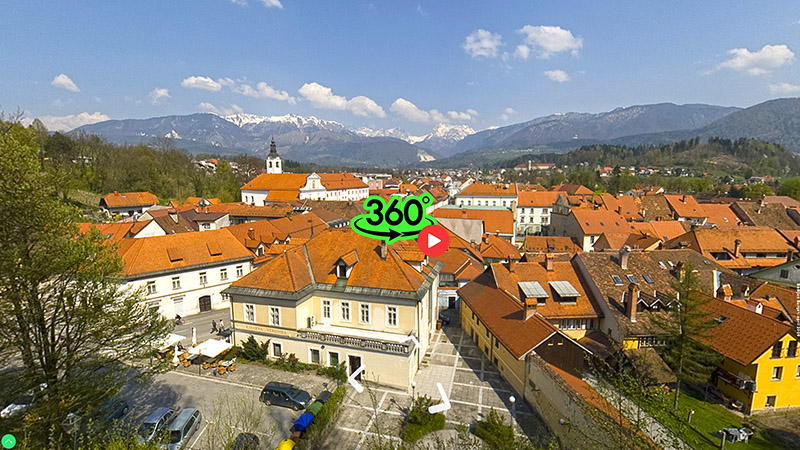

The Little Castle in Kamnik is a rocky hill rising above the old town center and has for centuries symbolized the town. Its geographical position on a limestone outcrop allowed strategic control over traffic routes through the Tuhinj Valley, which connected Styria, Upper Carniola, and the Littoral. Thanks to its natural elevation, the castle functioned both as a defensive stronghold and a cultic center, a feature typical of many early medieval settlements.
Originally, the castle was called Stein, a name preserved in the inscription on coins minted in Kamnik in the early 13th century (Civitas Stein). The first written mention of the Little Castle dates back to 1202, when Duke Berthold of Merania pledged both Kamnik castles – the Little and the Old Castle. This proves that the castle had already been built in the 12th century, most likely under the Counts of Andechs.
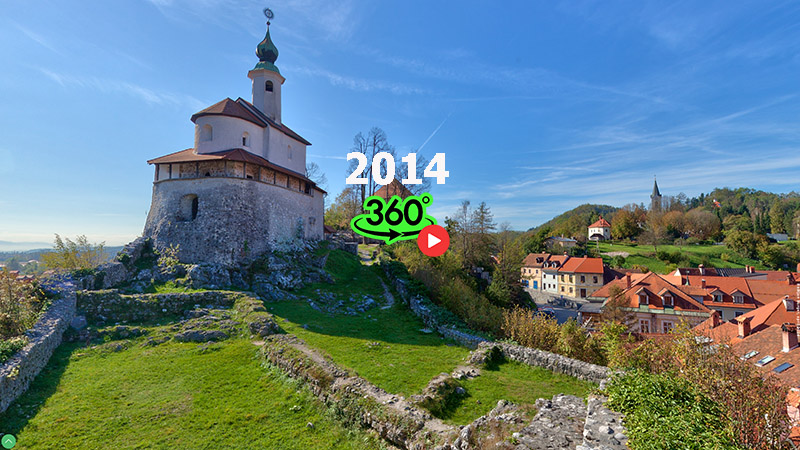
In the early 13th century, the Little Castle gained economic importance through its mint. During the late Middle Ages, the castle gradually lost its military function and remained primarily as a symbol of urban identity. By the 17th and 18th centuries, it had fallen into ruin, with only the chapel and tower remnants preserved.
The most important surviving structure of the Little Castle is the Romanesque chapel of St. Margaret (also known as St. Eligijus), considered one of the most significant Romanesque monuments in Slovenia. The chapel is two-storied: the lower chapel contains a crypt – a rarity in the Slovenian context – while the upper chapel is dedicated to Our Lady of Sorrows. In the 15th century, the upper chapel received a Gothic vault crafted by Kamnik’s stonemasons.
Today, the ruins of the tower and parts of the defensive walls are still visible. In the 20th century, the roof of the belfry was renovated, and the Gothic vault of the upper chapel was reconstructed. Beside it, a permanent exhibition presents the history of the Little Castle and the legend of Veronika.